

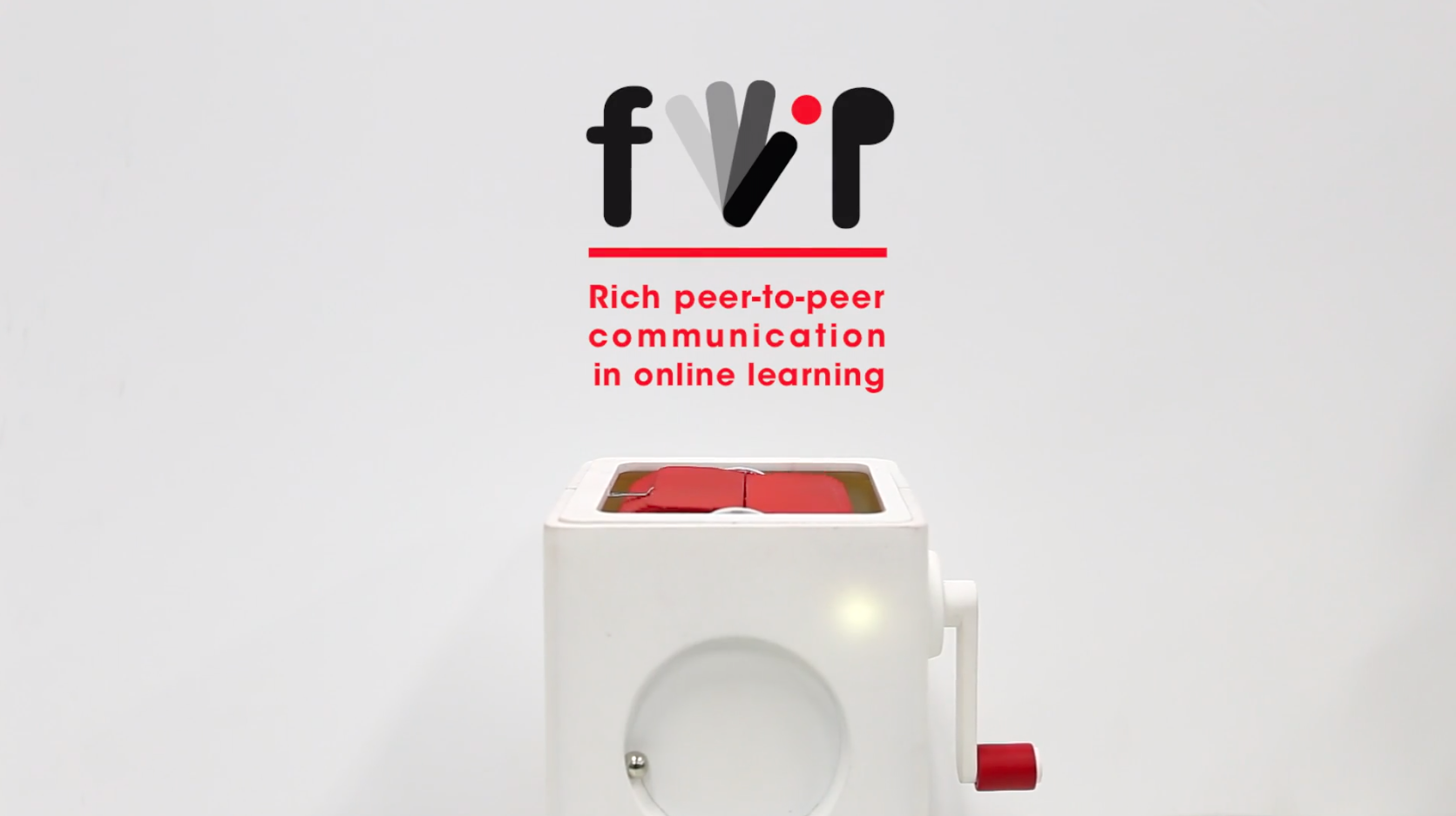
“How can tangible interaction facilitate peer to peer communication in online learning?”
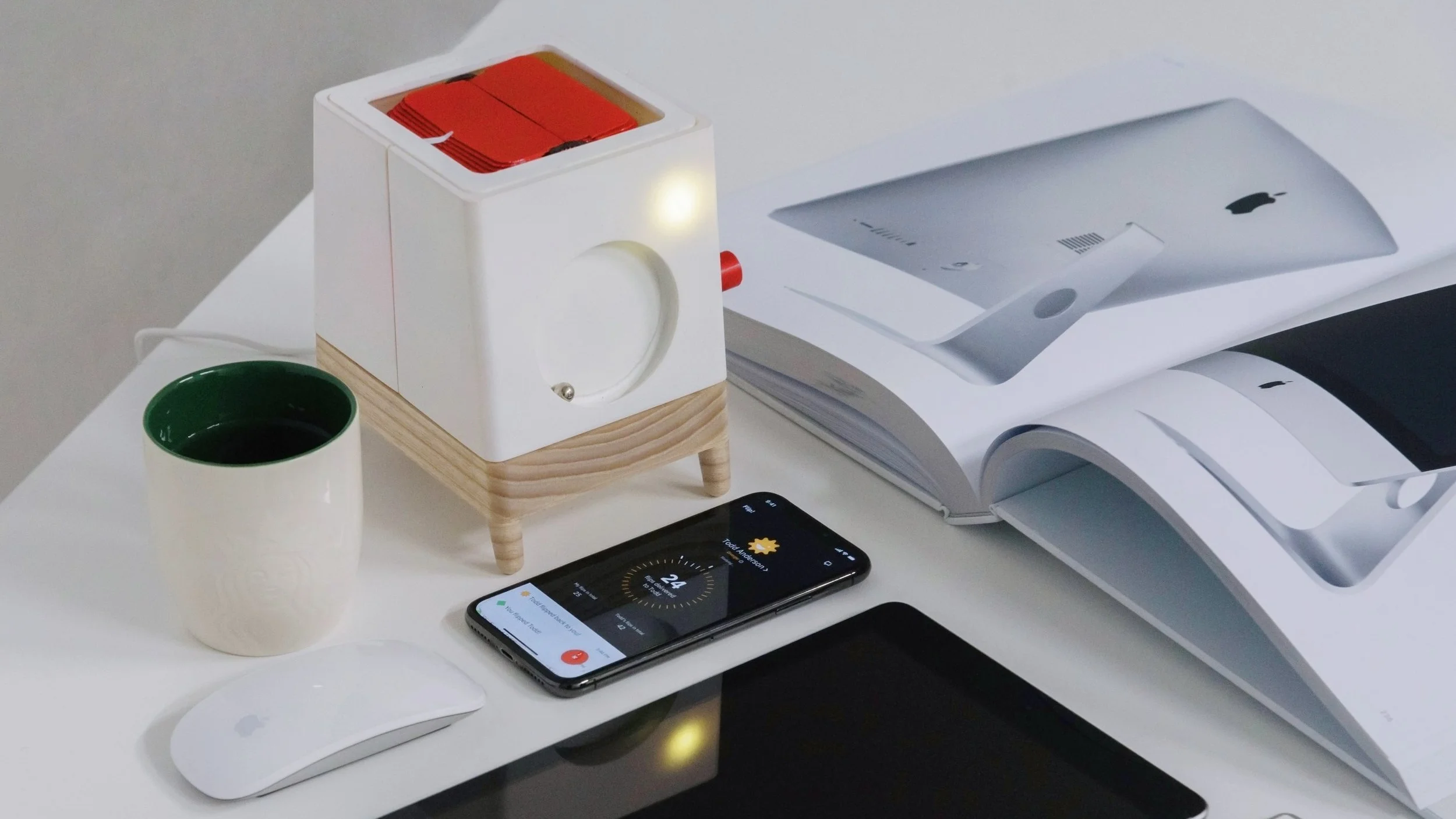
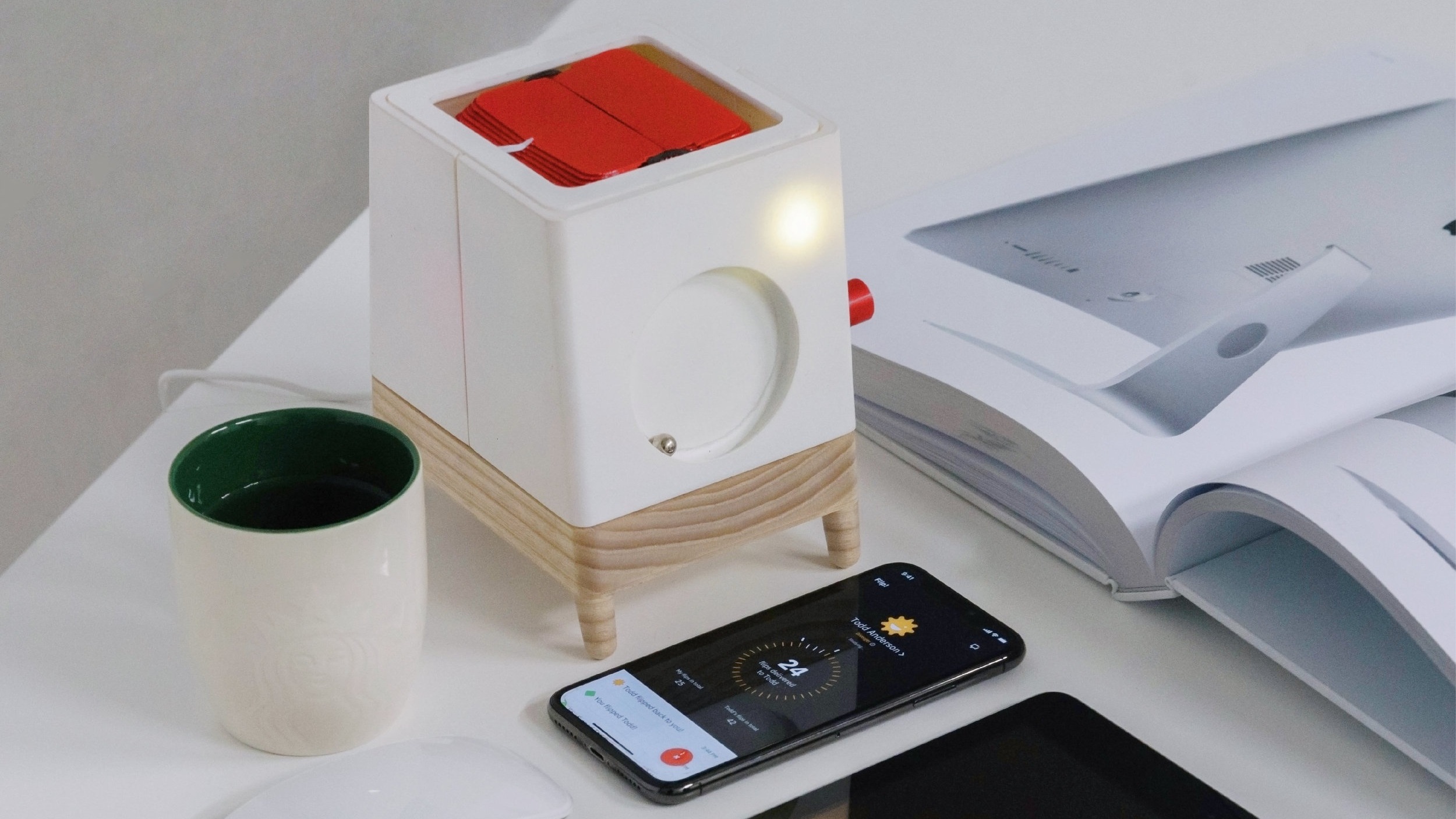
FlipMe is an IoT (Internet of Things) companion that aims to augment peer-to-peer interaction for active online-learning. FlipMe physicalizes the peer’s learning activity.
This was a project for my master’s graduation project at UNIST. My role was conducting a literature review, user study, analyse data and prototyping mobile application and designing physical structure and embodied system.
• 2019
• Solo Project (with technical support)
- YoungChul Chung: Structure design
- Byunghern Kim: Embodied system, Backend development
• Tools: Sketch, Framer, Arduino, Solidworks
• Output: High fidelity working prototypes (mobile app, table-top product)
Introduction
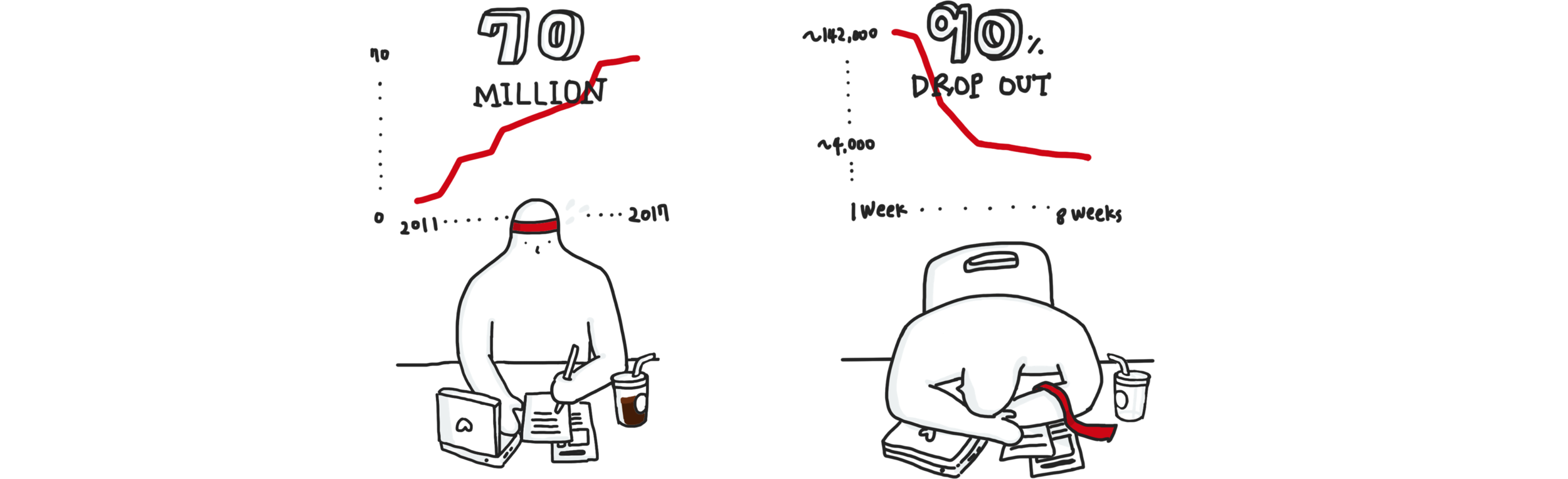
Millions of people around the world now use online learning as a convenient and inexpensive alternative to classroom-based education (Dhawal Shah, 2017). Despite these advantages, online courses suffer from high drop-out rates. Approximately 90% of all students do not complete their online course (Hong Lu, 2007).
Opportunity
Prior research has suggested the limited opportunities for social interaction between students may contribute to these undesirable outcomes (Boud et al., 2014), (Cercone, 2008). Especially, tangible interaction methods such as data physicalization or tactile communication are evaluated as beneficial for social interaction among students through helping the perception of information through implicit, expressive signifiers (Gaver, W. W. et al., 2013).
In order to address the challenges above, we developed FlipMe, an Internet of Things companion augmenting peer-to-peer interaction in real time.
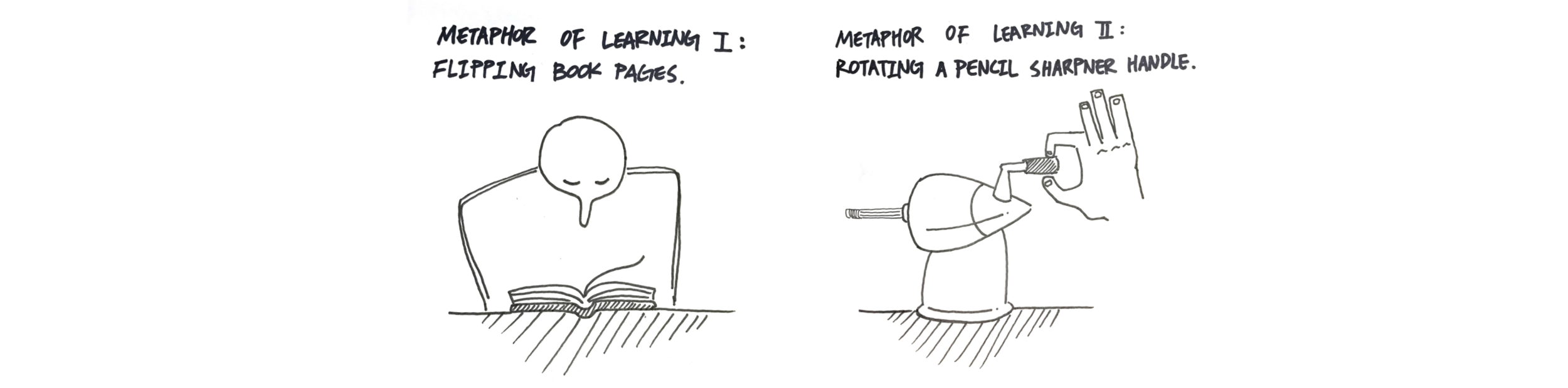
Metaphoric design
Main interactions: Flipping top indicator and rotating handle are inspired by what we do while studying to convey familiar emotion to novices. As examples, reading a book and sharpening a pencil.
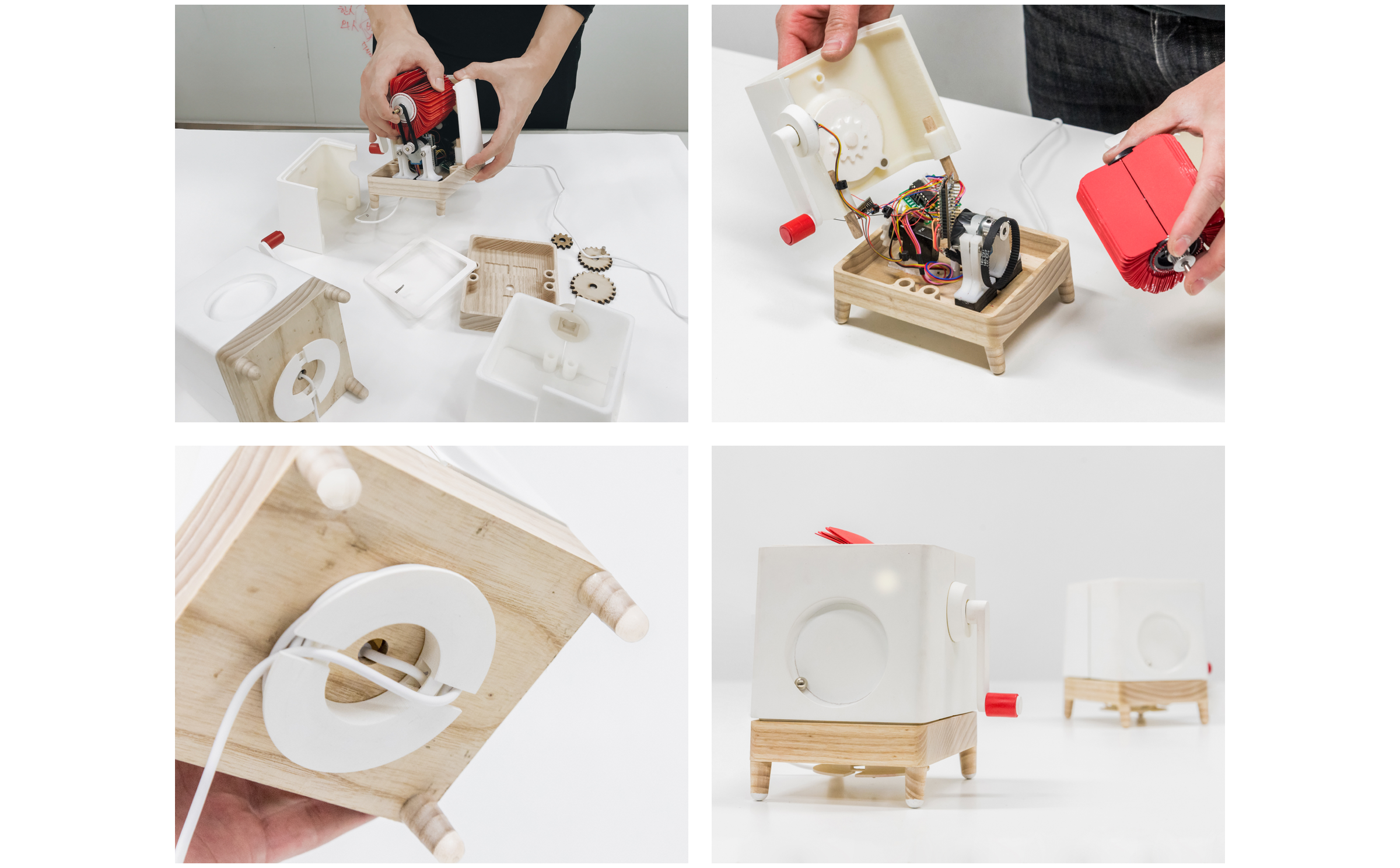
Product Hardware was developed using CAD (computer-aided design) modelling software. Based on material and shape complexity, we utilised 3D printing, laser cutting and CNC (Computer Numerical Control) machining in the manufacture of working prototypes. For real-time parallel control, Mbed was used as an operating system for step motor rotation measurement, servo motor angle control and internet communication. The handle’s rotating pattern is divided into 10 levels and recorded via user input, with data reported to the Internet. The 'rotation angle' per 1 second to ‘rotation index’ is: 0 ~ 17 degrees= 1, 342 ~ 359 degrees= 10. A server runs through the express framework of NodeJs and reports for hosting on two websites, communicating with two devices before providing appropriate commands.
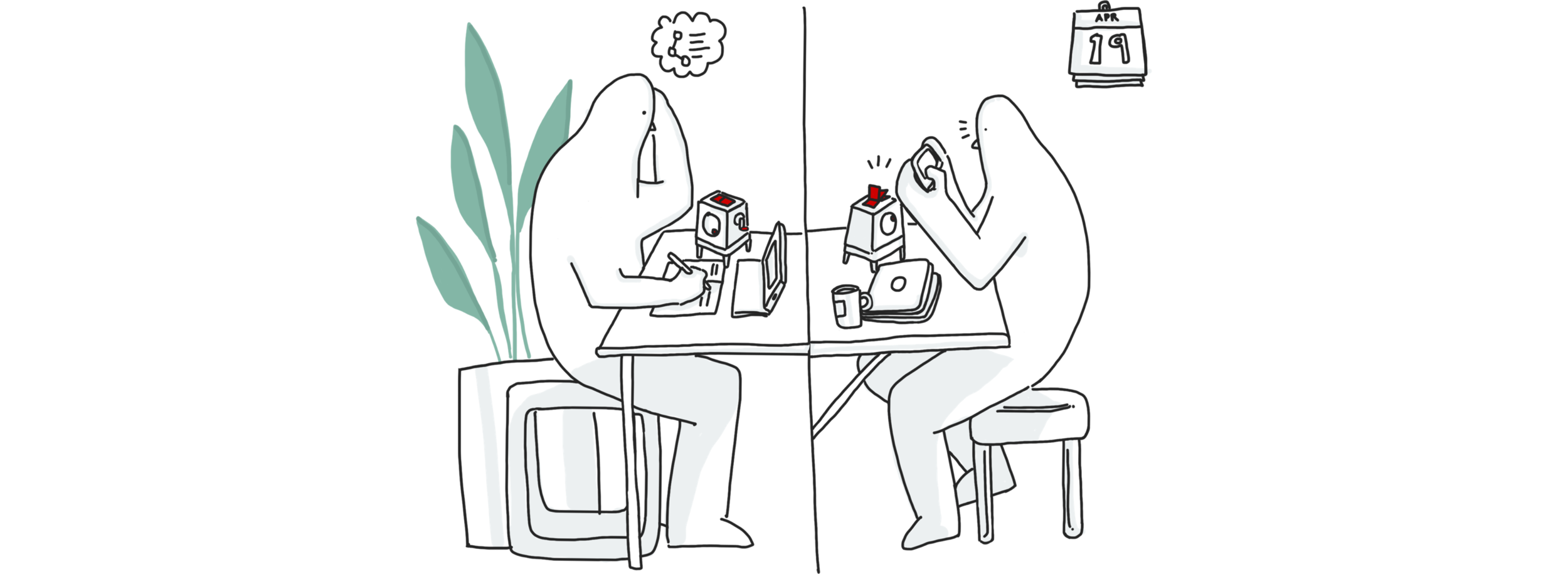
FlipMe physicalizes peer’s learning activities to motivate social interaction and increased collaboration, thus addressing a limitation of online learning (Nisbet, D., 2004).
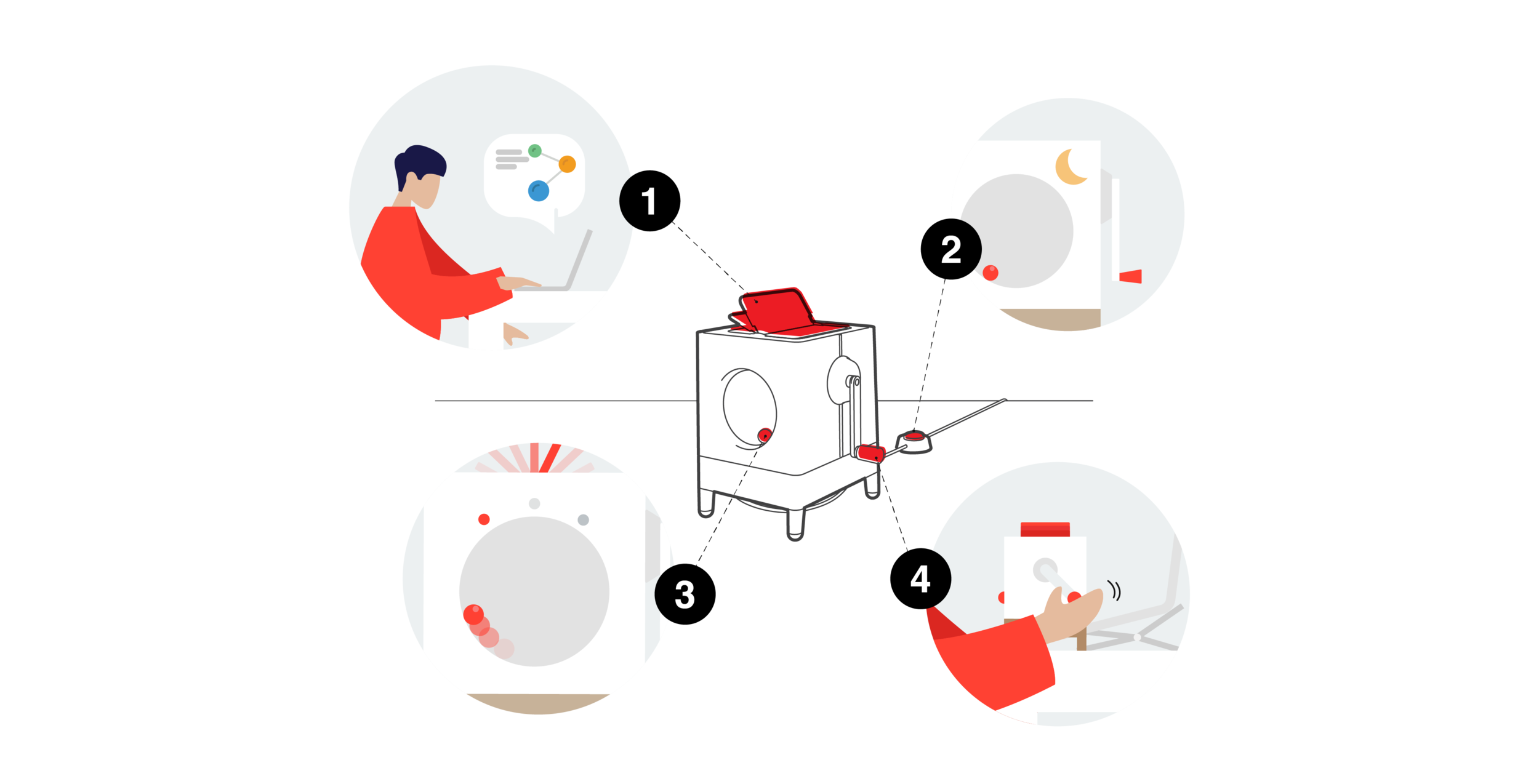
Interaction Scenarios
(1) A flipping top provides real-time feedback through a ‘reading-a-book-like’ motion, triggered by a paired student’s viewing of video content. (2) To not to be disturbed, students can press the sleep button while they want to focus on learning activities. (3) Group study activities are further expressed through a ‘rolling-ball’ feedback. (4) A rotatable handle provides a nudging function for peer-to-peer interaction.
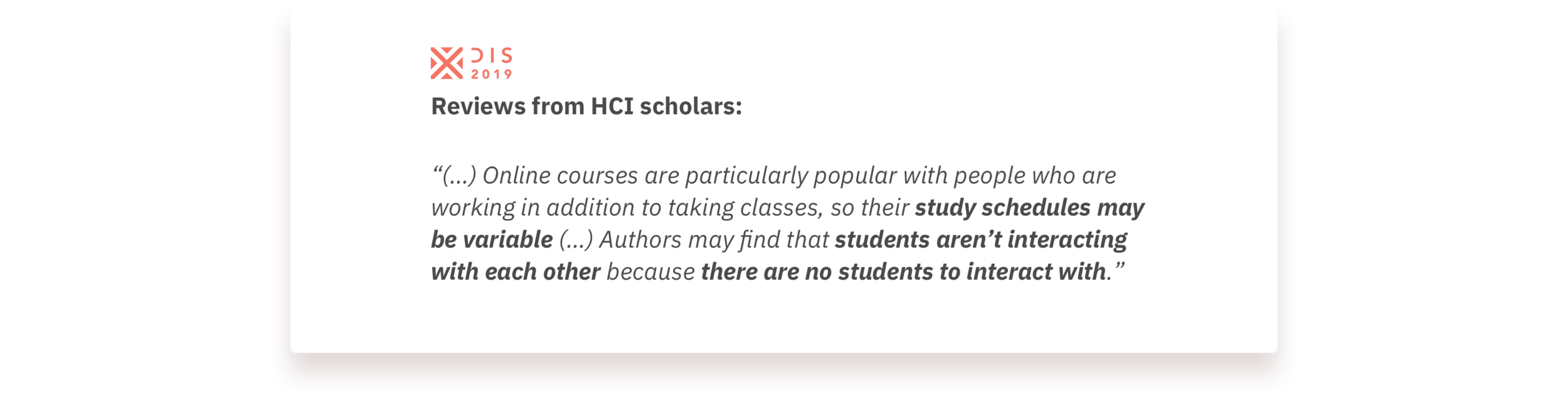
From the tangible interface solution, we obtained the advice regarding the limitation of tabletop product to connect students in online learning from the internationally announced HCI scholars (https://dis2019.com/organizers/).
Through this understanding, we started to build up a mobile app to provide an opportunity for students to communicate anywhere, anytime.
The advantage of the online experience is that people can study anytime, anywhere. Besides, some researchers addressed that existing online education platforms are not particularly designed for peer learning activities. For both issues above, I proposed key screens of novel mobile application design that peers will be able to influence each other socially.
Onboarding
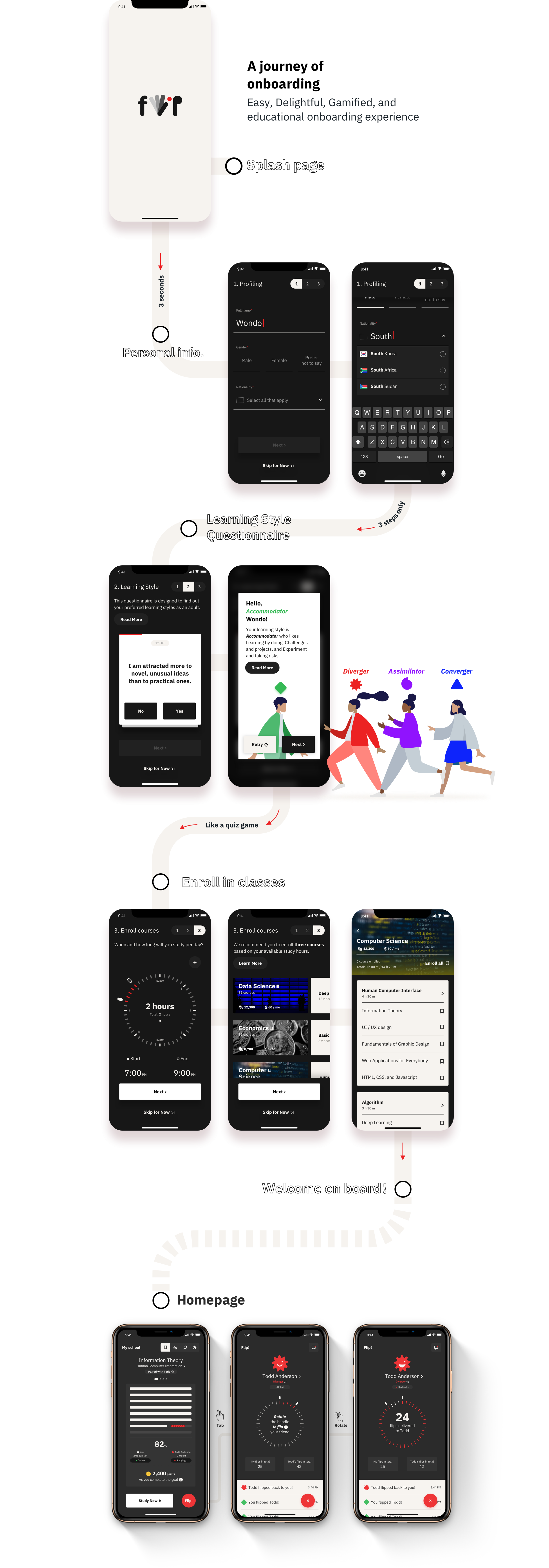
Peer learning experience becomes better when students learn in a group with various learning styles. For this, we applied Kolb’s learning style questionnaire as a profiling step. To overcome a long questionnaire process (80 questions), the onboarding UX was designed to be easy and fun.
Homepage (my courses):
The FlipMe app’s main page, that I inspired by handwritten notes, provides information on synced peers’ learning activities based upon common goals. With this, connected peers can observe a friend’s studying progress. This is evaluated by the user study that visualization of friend’s learning activity motivates people to begin studying in an optimistic manner without any forcing actions such as penalty course score.
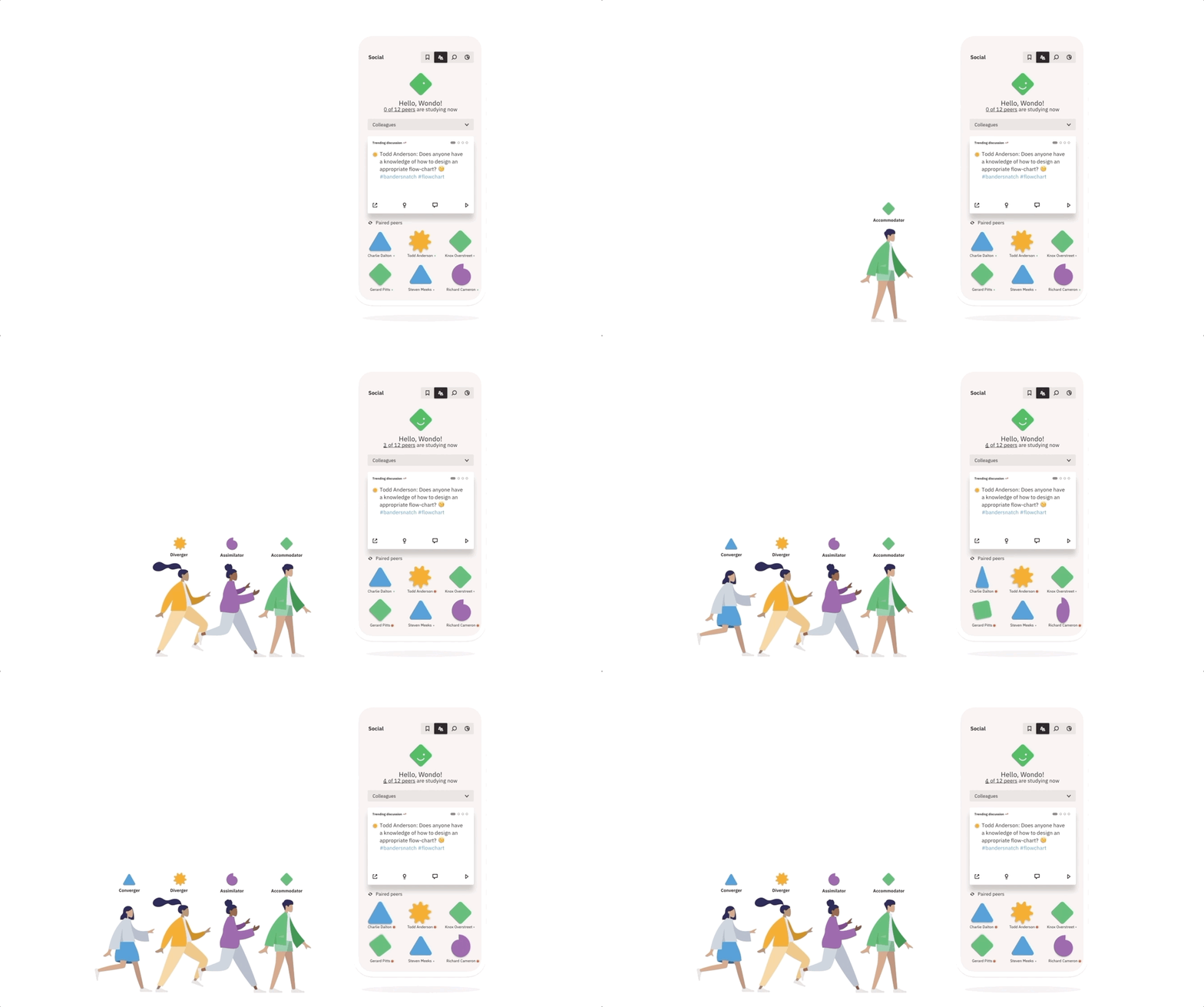
Every user in FlipMe’s mobile app has their own learning style results and profile symbols through Kolb’s learning style questionnaire. With motions of friends’ symbols, users can recognise friends’ current states among; offline (no motion), online (no movement but green light), studying (rotating motion) and being flipped by other friends (flipping motion).
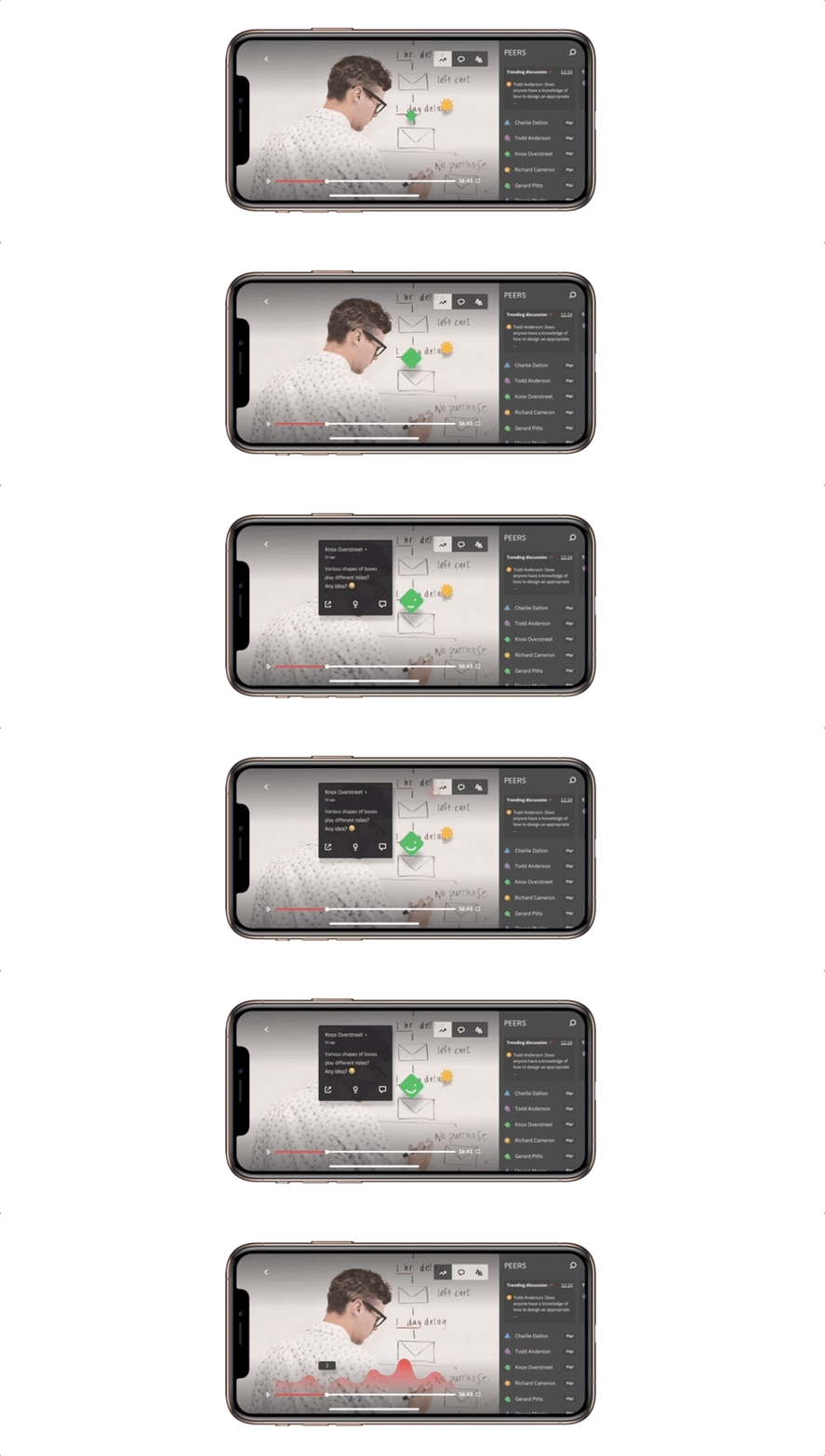
Students can communicate on the specific time of the video, also can add a discussion point on any area. Firstly, symbols on the screen are the locations of peers’ discussion. With this, I tried to enhance discussion experience which is one of the most significant aspects for better learning outcome (Carmel Ken, 2016). The line chart on top of the playback bar indicates the popularity of peers’ activities such as the number of comments and active students in discussion.
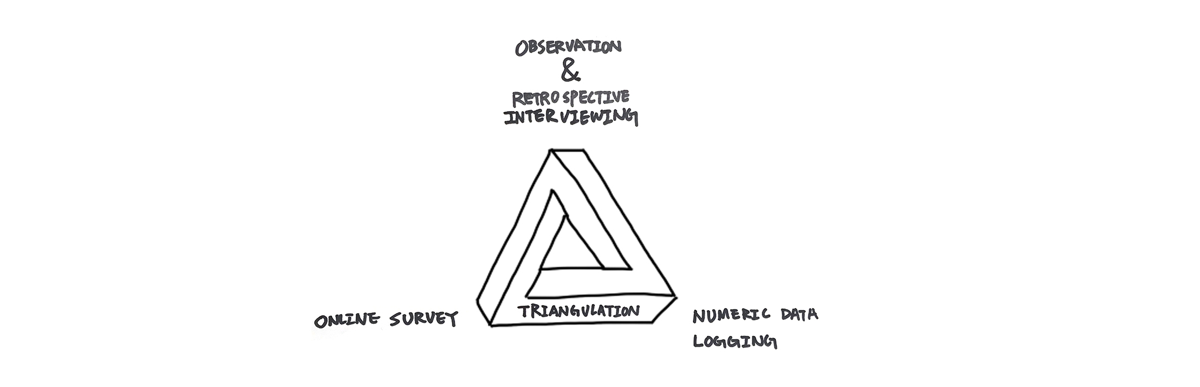
In order to facilitate validation of data through cross verification from two or more sources, I designed user study methodology with Triangulation that is consisted with the online survey, observation (fly-on-the-wall) and retrospective interview, and numeric data collection from FlipMe devices and internet server (Amazon Web Service).
An in-lab study to evaluate FlipMe’s potential to stimulate peer-to-peer communication when engaging online video content was conducted.
Participants
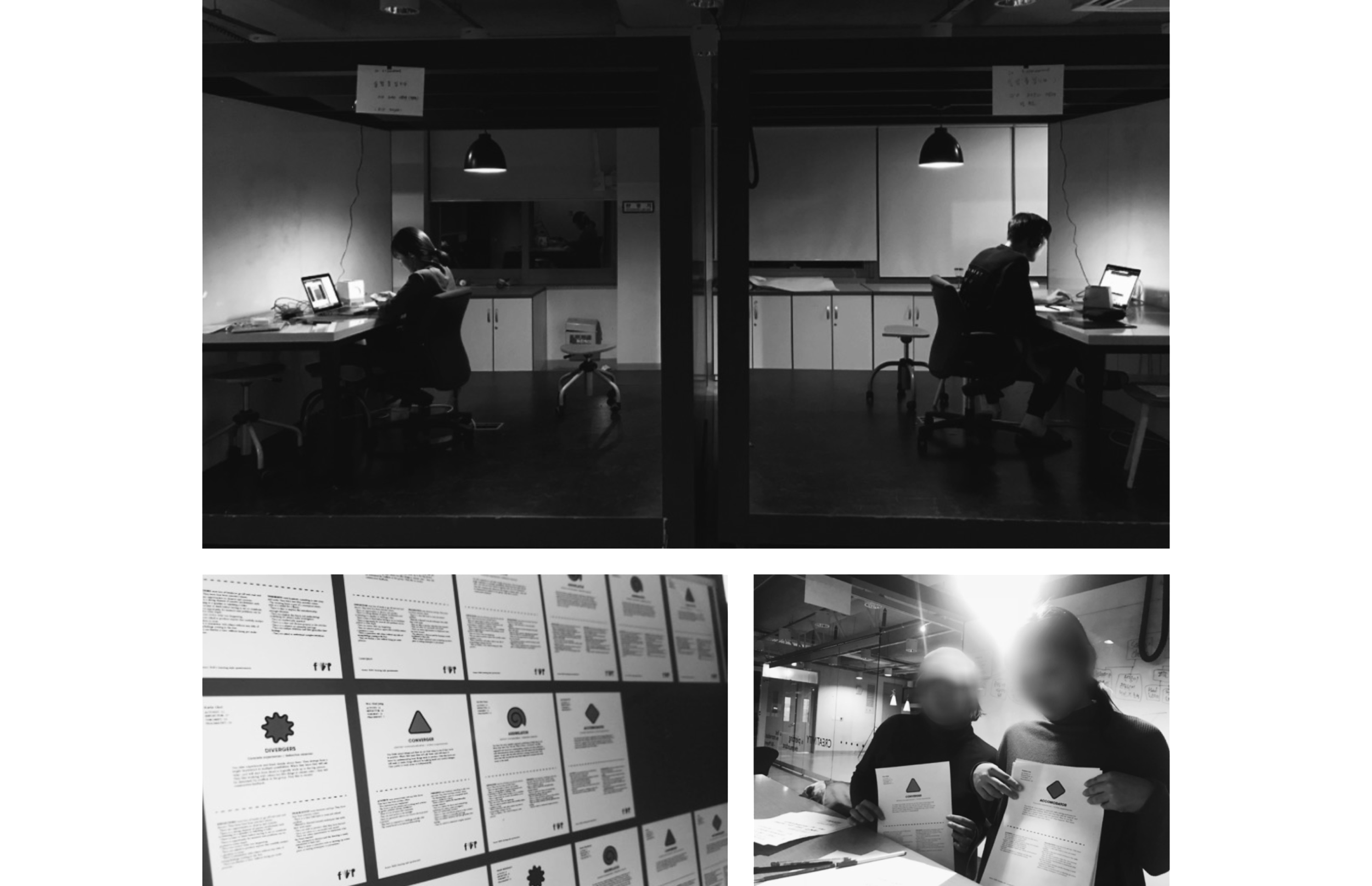
20 university students, with an age range of 22-32 years (8 female, 14 male), were recruited. Participants were grouped in pairs with the same (4 pairs) and different (6 pairs) learning styles (Kolb, A. Y., 2005) combination. Pairing in terms of learning styles was adopted to explore the influence of learning style upon video watching behaviour (Lu, Hong, et al., (2007).
Apparatus
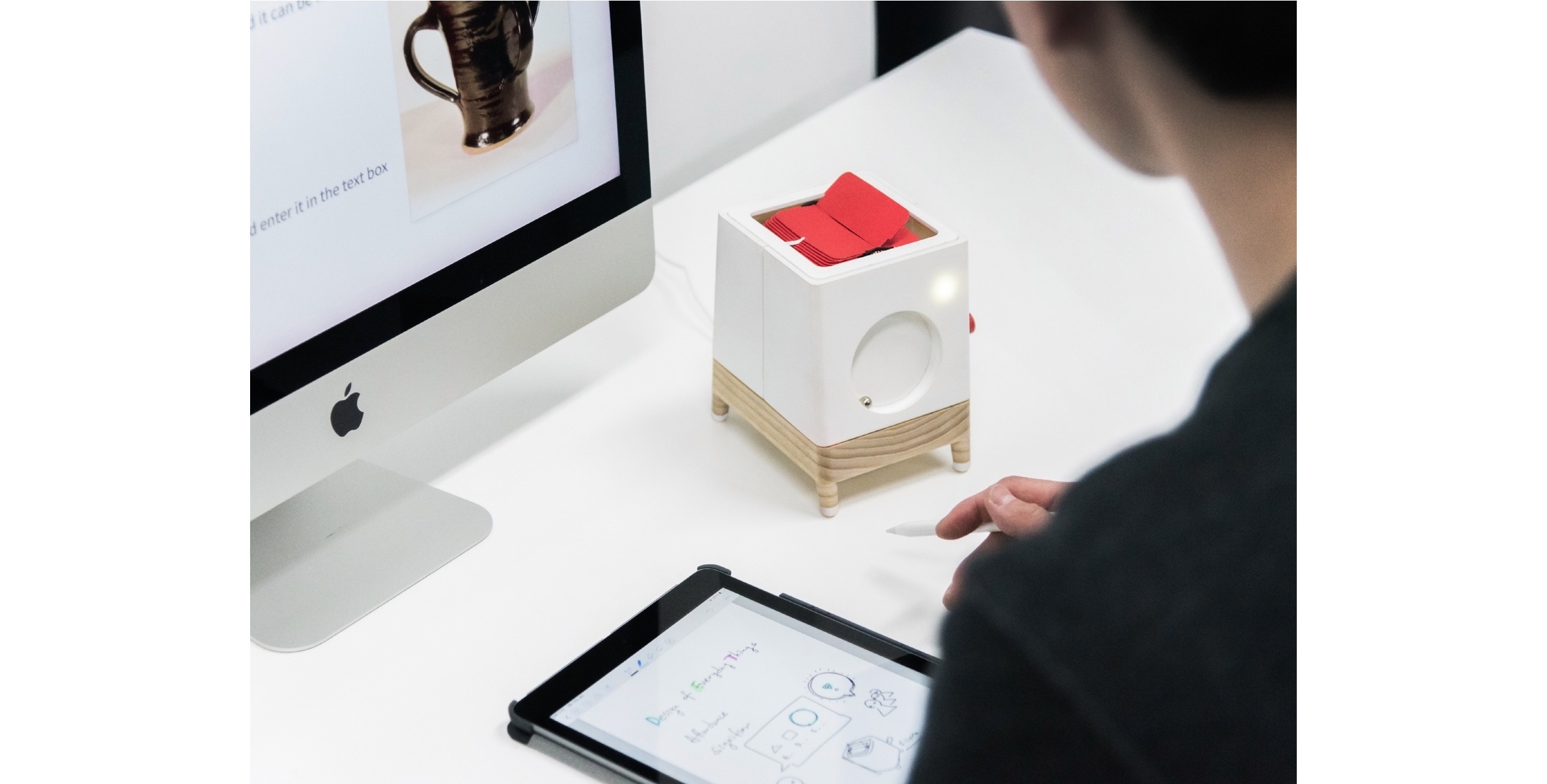
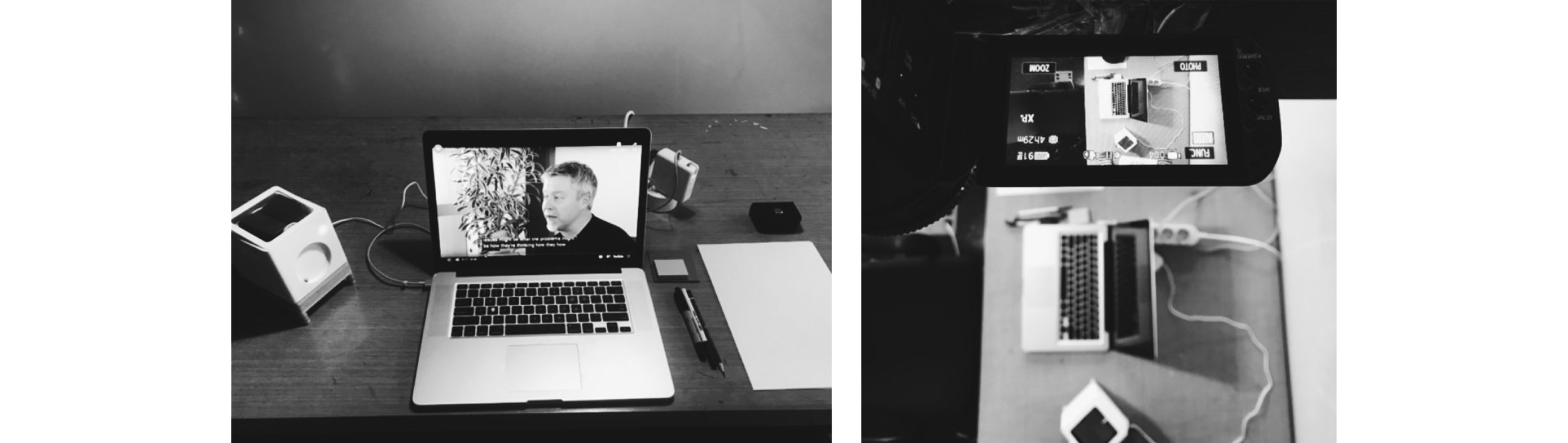
Two FlipMe working prototypes were connected through an internet server within a lab environment, with participants situated at remotely located spaces.
Procedure
The procedure of the entry question (10 minutes), the video observation (60 minutes), the discussion session between participants (15 minutes) and the retrospective interview (10 minutes) were recorded. A 24-minute video was provided, taken from Udacity course, Intro to the Design of Everyday Things (Don A. Norman, 2015). The length of the video content was set to be similar to the length of the previous study exploring dropout rates (Alman, S. W. et al., 2017).
Data collection
Data consisted largely of quantitative data logged on an internet server, together with transcribed interview responses. The quantitative data was composed of three major components for each user: video viewing pattern (start and end, total viewing time), spin frequency and message frequency. Four types of raw data were obtained: time watching a video (in min/sec), handle spins (absolute frequencies), participant learning style category and messages sent (frequencies). Qualitative interview responses were analysed through the affinity-diagramming method.
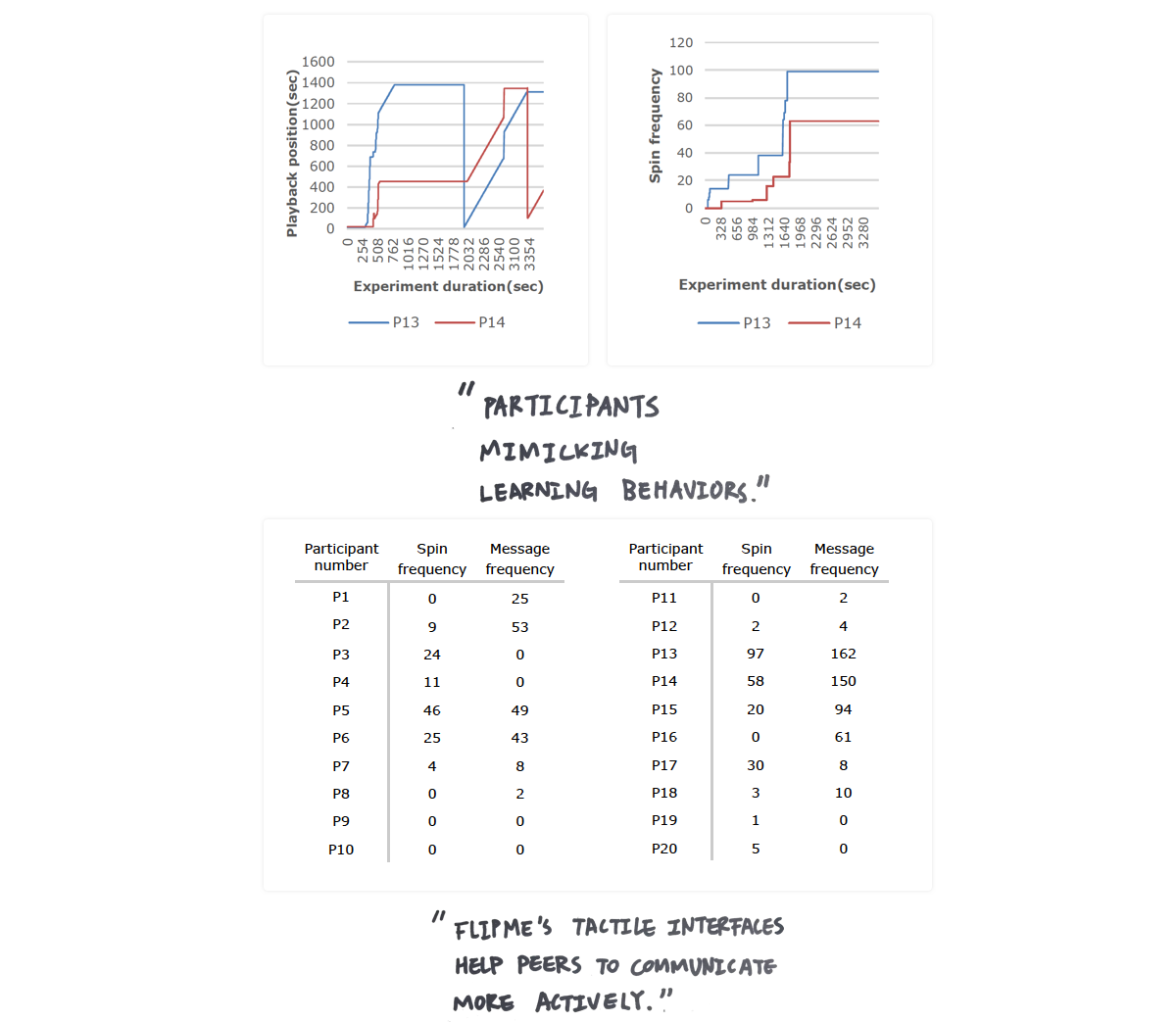
First, we compared the video playback position and spin frequency between two paired peers. We observed paired participants P13 and P14 showed similar patterns of video watching and exchanging spins (line chart, above). We interpreted this data as evidence that physicalizing their learning activities motivate the two students to study.
Retrospective interview responses supported this finding. P14 stated, “At the beginning of the experiment, I was watching ‘YouTube’ game clip. But I felt I also needed to study, once I realized my friend was studying.”. In addition, we observed a relation between the frequency of handle turns and messaging. P13 stated, “I spun the handle first, then my friend sent a message to ask the reason for spinning. Then we started to chat about the video”. P14 replied. “I sent a message about our task to her (P13) then turned the handle, or turned the handle then sent a message.” Lastly, P17 and P31 commented, “I finished my learning task and I turned the handle to poke my peer to finish the task as well as me.” In addition, a statistically significant correlation between the frequency of handle turns and the number of messages exchanged was identified (Pearson's r = 0.81). This result suggested participants who messaged frequently were also turning the FlipMe's handle at an increased rate. This suggests that participants integrated turns in their emergent communication styles - those who regularly corresponded also regularly used the handle, while those who messaged sporadically also showed lower frequency rates of handle turning.
Retrospective interview response indicated how the use of FlipMe provided an immediate channel to initiate communication between peers through FlipMe’s tangible interaction. An initial analysis of interviews suggested seven participants (P5, P12, P13, P14, P16, P17, P18) as directly citing the FlipMe rotating handle as a means to communicate. For example, P5 mentioned, “I wanted to draw the attention of my friend. There was something I wanted to say in the chat, and when I did not have an answer, I gave notification a little more”.